Improve Your Garden Soil With Cover Crops
(Updated: Aug. 18, 2022, 6:56 a.m.)
If you have empty space in your garden that will remain bare through the winter consider planting a cover crop such as crimson clover, rapeseed, or rye. Cover crops provide many benefits, including weed and disease suppression, improving soil condition, and adding nutrients to the soil. Early fall is prime time to plant winter cover crops.
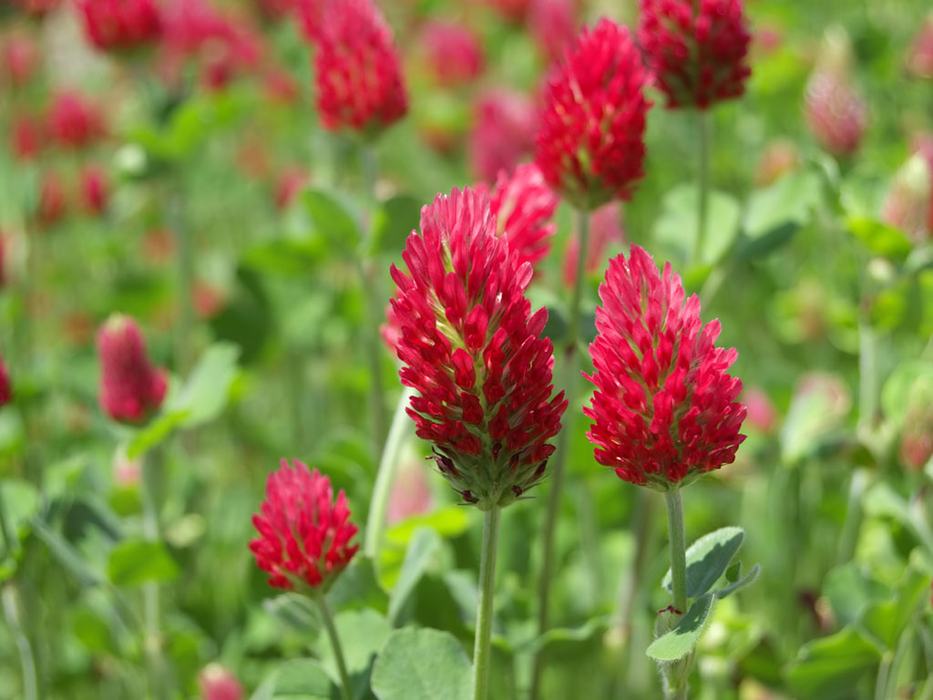
Members of the pea and clover family are known as legumes. These plants are able to capture nitrogen from the air and make it available to plants, providing a natural source of fertilizer. They are able to do this thanks to a beneficial relationship they have developed with a type of soil dwelling bacteria. Legumes that are infected with these beneficial bacteria will have pinkish colored bumps and knots on their roots.
The main benefit of growing a type of legume as a cover crop is they increase nitrogen levels in the soil. This means you will not need to add as much fertilizer to crops planted in beds where a legume has grown, which can be particularly helpful in sandy soils. Types of legumes commonly grown as winter cover crops include crimson clover, Austrian winter pea, and hairy vetch.
For best results, sow legume cover crops by mid October. If you are planting these crops in beds where beans or peas have not grown recently, you may get better results if you inoculate the seed first. Legume inoculants can be purchased from some garden center or online. Inoculants contain the beneficial bacteria that help legumes fix nitrogen.
Plan to till these crops into the soil in early spring, just as soon as they begin to flower. You can either till the crop directly into the soil or mow it first and then till it in. Either way you will get the greatest increase in nitrogen by mixing these crops into the soil rather than simply mowing them and leaving them on the surface.Grains and Grasses
Grains and grasses that are grown as cover crops include annual ryegrass, cereal rye, wheat, oats, and barley. They can be planted a little later than legumes, from October through mid November. Grains and grasses are the best cover crop choice for weed suppression, especially when they are mown and left on the soil surface rather than tilled into the soil. These cover crops are often seeded mixed with legumes like crimson clover and hairy vetch at a rate of 3 parts grain to 2 parts legume (for example: 0.75 lbs cereal rye and 0.5 lbs crimson clover per 1000 ft2).Mustard and Rapeseed
Certain mustard varieties and its relative, rapeseed, can reduce soil diseases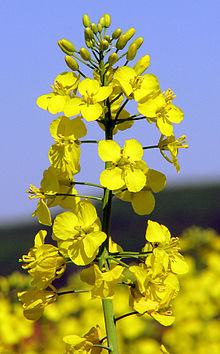
when they are tilled into the soil as a green manure. They are particularly effective at reducing root knot nematodes, a destructive pest of many summer vegetables. While technically a type of microscopic worm, nematodes are considered a plant disease. Vegetables that are susceptible to nematode infection include cucumbers, tomatoes, eggplants, okra, and cantaloupes.
Plants infected with root knot nematodes will be stunted, wilt frequently, and produce little to no harvest. When you pull these plants up, you will notice their roots are knotted and bumpy, but these bumps are not caused by a beneficial bacteria like those on legume roots. Instead they are infected by a destructive parasite.
There is no way to kill root knot nematodes in vegetable gardens. Instead gardeners must suppress them by planting resistant varieties and through practices such as incorporating nematode suppressive cover crops. These include ‘Dwarf Essex’ rapeseed, ‘Pacific Gold’ mustard, and oilseed radish, which should be planted in October and tilled into the soil two to three months later. Other winter cover crops that help suppress nematodes include hairy vetch and cereal rye, but all of these crops must be tilled into the soil to reduce nematode levels.
If your local garden center does not have seed for these crops in stock, try ordering online. Johnny's Seed is one possible source for many of these crops: http://www.johnnyseeds.com/c-280-green-manures.aspxLearn More
Find out more about cover crops on the Growing Small Farms website, https://www.ces.ncsu.edu/chatham/ag/SustAg/covcropindex.html.If you have questions about cover crops contact your local Extension office:- If you live in Pender County, call 259-1235.
- In New Hanover County, call 798-7660.
- In Brunswick County call 253-2610
- Or visit https://www.ces.ncsu.edu/ to find your county office
Written By

More About