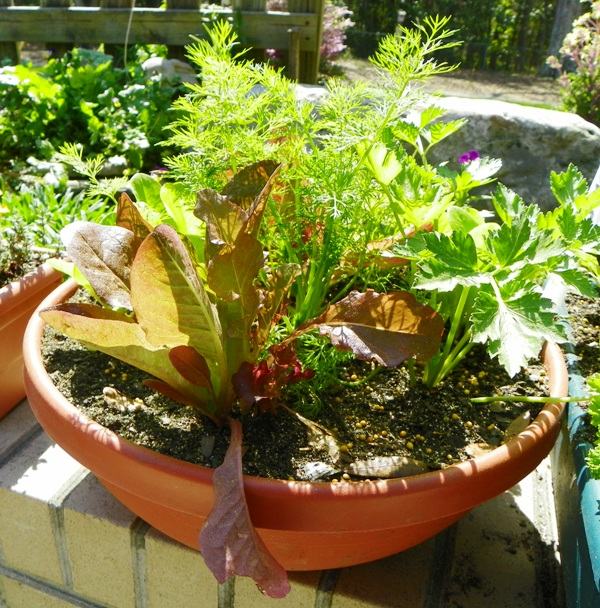
Don’t let limited garden space stop you from growing vegetables this fall. Many cool season crops are easy to grow in containers and now is the time to plant them. Salad greens like lettuce, spinach, and arugula thrive even in shallow pots. They are often planted mixed together with herbs and other greens in bowl shaped containers, providing all the ingredients you need for healthy, tasty salads in a single pot.
Supplies Needed
You do not need a lot of supplies to start a salad bowl garden. Start with the container, which does not have to be bowl shaped. Rectangular window box containers and round pots work just as well. Containers of many types can be recycled for the purpose as long as they are at least six inches deep and have several drainage holes drilled in the bottom. I have even seen cardboard boxes used as planting containers for a single season. An old t-shirt can be wrapped around the outside of the box to help hold it together.
Next you need potting soil. Most potting soils will work well, but avoid those that have lots of bark in them. They are too coarse for smaller pots, causing them to dry out too quickly. If you are unsure what to buy, choose a seed starting mix. These mixes usually contain a combination of peat moss and vermiculite and are designed for use in shallow containers. There is no need to buy a soil that already contains fertilizer. In fact, it is usually better to add fertilizer separately.
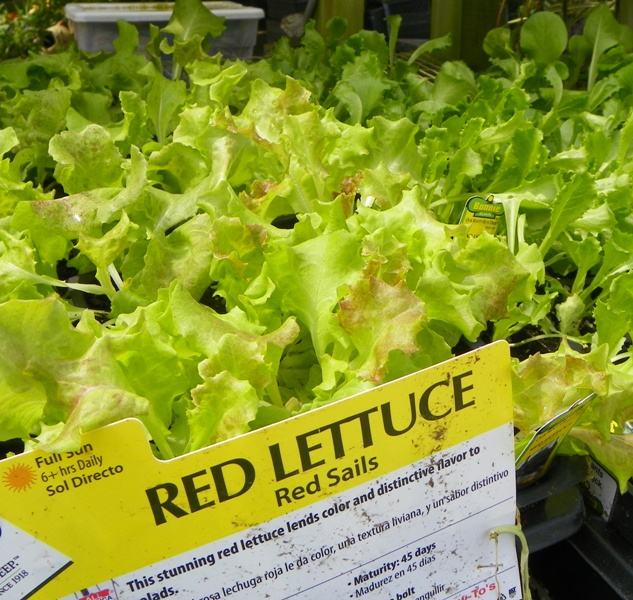
You will also need plants. You could sow seed into your containers and grow your own plants, but since you will not need many plants it is often easier and quicker to purchase transplants from a garden center. Young lettuce plants are readily available, including those with green, red, frilled, and lobed leaves. Other greens that can be included in your salad bowl include mizuna, a mild flavored Chinese mustard, spinach, tatsoi, arugula, Swiss chard, and spicy red mustard. Add dill, cilantro, or parsley plants for additional flavor. You could even include edible flowers like pansies or Johnny jump ups, which have a mild, sweet flavor.
You will need two types of fertilizers for best results; a liquid fertilizer to get plants going, and a slow release fertilizer to mix into the potting soil. Liquid fertilizers include those from organic sources like compost tea or fish emulsion, as well man made products like Miracle Gro. Use these to water plants in after they are initially planted and for the first few weeks. You can use liquid fertilizers alone to supply the nutrients your salad garden needs, just remember to apply them on them regular basis. Mixing a time release fertilizer like Osmocote or an organic fertilizer like Plant Tone into the potting at planting time will provide a more reliable source of nutrients for the whole season.
Planting and Care
Plant individual plants fairly close together in your salad bowl, around three to four inches apart. Place the container somewhere it will receive at least six hours of sun each day and remember to check daily to see if your garden needs to be watered. When you do water, add water until it starts to drain out of the holes in the bottom of the container. If you have a saucer under your container be sure to pour it out once all the extra water has drained out of the pot.
You can start harvesting in about a month by picking individual leaves from plants. If you eat a lot of salad you may want to plant several containers. To extend the harvest time, plant a couple of containers now and a few more every week or two through mid-October. All of the plants suggested for salad bowl gardens will tolerate frost and can survive temperatures down to twenty eight degrees.
Learn More
Visit your local
Cooperative Extension office to learn more about gardening and landscape care. Go to
https://www.ces.ncsu.edu/local-county-center/ to find your county Extension center.