
Horticultural Grants
The Extension Master Gardener℠ Volunteer Association of Pender County would like to announce their $1000 horticultural grants for the …



El inglés es el idioma de control de esta página. En la medida en que haya algún conflicto entre la traducción al inglés y la traducción, el inglés prevalece.
Al hacer clic en el enlace de traducción se activa un servicio de traducción gratuito para convertir la página al español. Al igual que con cualquier traducción por Internet, la conversión no es sensible al contexto y puede que no traduzca el texto en su significado original. NC State Extension no garantiza la exactitud del texto traducido. Por favor, tenga en cuenta que algunas aplicaciones y/o servicios pueden no funcionar como se espera cuando se traducen.
Inglês é o idioma de controle desta página. Na medida que haja algum conflito entre o texto original em Inglês e a tradução, o Inglês prevalece.
Ao clicar no link de tradução, um serviço gratuito de tradução será ativado para converter a página para o Português. Como em qualquer tradução pela internet, a conversão não é sensivel ao contexto e pode não ocorrer a tradução para o significado orginal. O serviço de Extensão da Carolina do Norte (NC State Extension) não garante a exatidão do texto traduzido. Por favor, observe que algumas funções ou serviços podem não funcionar como esperado após a tradução.
English is the controlling language of this page. To the extent there is any conflict between the English text and the translation, English controls.
Clicking on the translation link activates a free translation service to convert the page to Spanish. As with any Internet translation, the conversion is not context-sensitive and may not translate the text to its original meaning. NC State Extension does not guarantee the accuracy of the translated text. Please note that some applications and/or services may not function as expected when translated.
Collapse ▲The Extension Master Gardener℠ Volunteer Association of Pender County would like to announce their $1000 horticultural grants for the …

Pender County Extension Master Gardener Volunteers offer a scholarship program every year. Please see the links below for guidelines …
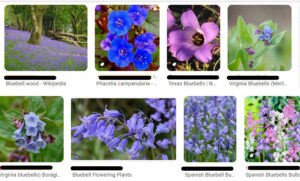
The Extension Gardener Plant Toolbox is your go-to source for curated images of plants and gardens. The images on …
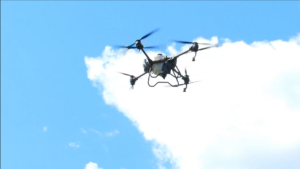
Interest in the use of unmanned aerial vehicles (UAVs), or drones as they are more commonly known, for pesticide …
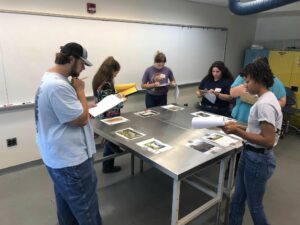
Lenoir Livestock Contest May 25, 2024 Skillathon Registration (Due May 11) Quiz Bowl Registration (Due May 11) Entry is $15 per contestant, one …

Farm to Fork Picnic The Farm to Fork Picnic, hosted by the Center for Environmental Farming Systems (CEFS), returns to …
April 21 – 27 is National Volunteer Week! National Volunteer Week is the perfect time to celebrate the important work …
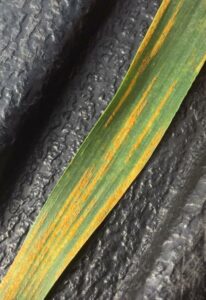
Stripe rust has appeared in eastern North Carolina. It was found April 17th in field plots of DG Shirley …

Soil samples are free from April until December. The rest of the year from December until April, they are …
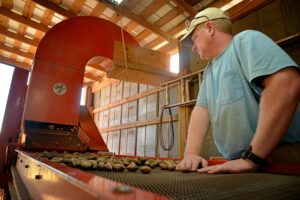
Through a collaboration with the USDA Agricultural Marketing Service (AMS), North Carolina Department of Agriculture and Consumer Services (NCDA …
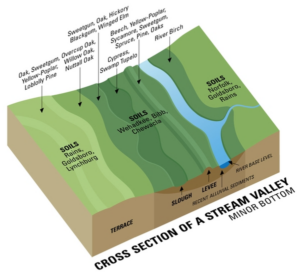
By making strategic land management decisions, landowners can have a forest that meets their needs. Whether you are in …
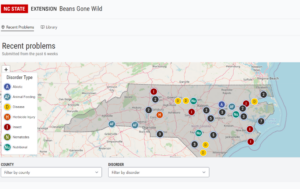
Beans Gone Wild is an interactive online tool that catalogs arising soybean issues across North Carolina annually. The issues …
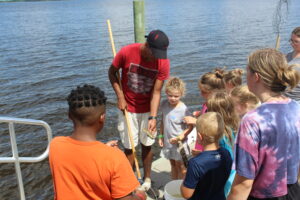
Check out the new article from NC State University news, It’s a Wolfpack World, featuring NC 4-H Camps. “Camp has this magical …
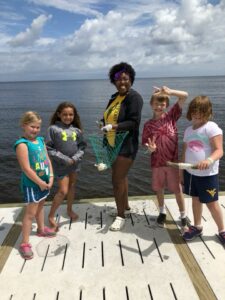
This spring, staff from North Carolina’s 4-H Camps joined the CBS 17 program, My Carolina, to share about the …
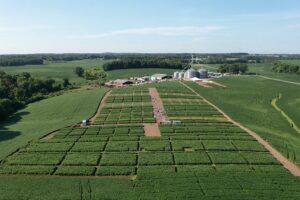
We have been targeting a public release of our dynamic soybean grower decision support tool which would allow producers …
Artificial intelligence (AI) is getting a lot of attention today. It is being used in medicine, education, research, business …
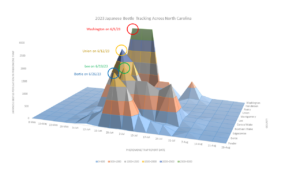
In 2022 and 2023, we maintained turf insect trapping sites to monitor adult and caterpillar activity, narrowing our application …
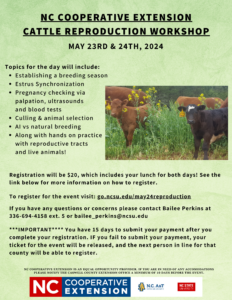
Join us for the 2024 Cattle Reproduction Workshop for Person, Caswell, and Granville Counties at the Butner Beef Cattle Field …
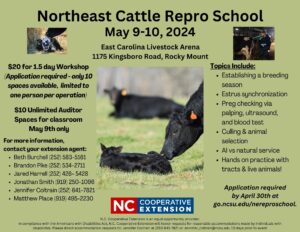
Join us for the 2024 Northeast Cattle Reproduction School at the East Carolina Livestock Arena (1175 Kingsboro Road, Rocky …
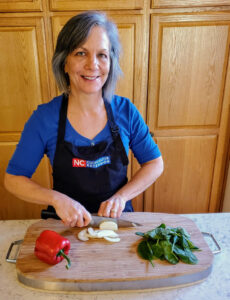
Margie Mansure serves as the Family & Consumer Sciences Extension Agent in Watauga and Caldwell Counties in Western North Carolina. She is the …