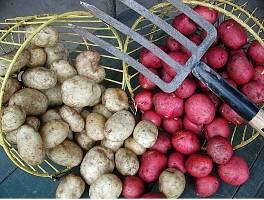
Potatoes are one of my favorite crops to grow in the spring garden. No matter what your age, nothing is more fun than digging potatoes from the soil – it’s like a tiny treasure hunt! And the taste of home grown potatoes is outstanding.
When and Where to Plant Potatoes
Potatoes planted in February will be ready to harvest in May and June. For best results, plant only certified seed potatoes, which can be purchased from garden centers this time of year. Certified seed potatoes are small potatoes that have been grown under special conditions to ensure they are free of diseases and usually give better results than potatoes purchased from the grocery store.
Potatoes grown in dry sandy soils and soils with pH over 5.5 are more prone to scab disease.
Potatoes need to be planted in rich, well drained soil. Wet soils often result in disease problems and crop failure. To yield well, potatoes require consistent moisture and prefer rich soils that have been well amended with organic matter such as rotted horse manure or compost, and have a soil pH of 5.5 to 6.0. Learn how to have your soil pH tested.
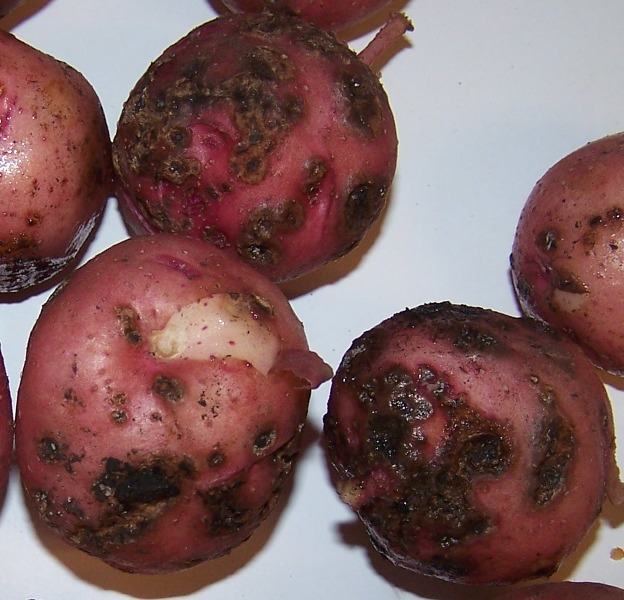
Potatoes grown in dry sandy soil and soils where the pH level is over 5.5 are more prone to potato scab, a bacterial disease that causes brown, corky scabs to form all over the potato skin.
How to Plant Seed Potatoes
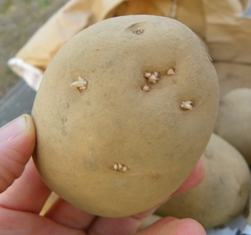
Potato varieties that do well in our area include ‘Yukon Gold’, a personal favorite with creamy, gold color flesh, ‘Kennebec’, and ‘Red Pontiac’, a red skin potato with white flesh and deep eyes. Cut seed potatoes into pieces that are each about the size of an egg and contain at least one sprout, known as an ‘eye’. Cut pieces can be planted immediately or sprouted indoors for a few weeks by placing them in a warm, sunny location.
Make sure each seed piece has at least one eye or sprout.
In the garden, plant seed pieces 6” deep and 10” apart in the row, with 3’ between rows. Keep in mind 12 pounds of seed potatoes can plant around a 100’ row, and yield over 200 pounds of spuds. Once harvested potatoes can be stored in a cool, dry, dark place such as a garage or shed, where they will keep for three to four months or more.
As potatoes grow, keep an eye out for their worst enemy, the Colorado potato beetle. Most years, adult beetles emerge in our area in late April and begin laying clusters of bright orange, football shaped eggs on the back of potato leaves.