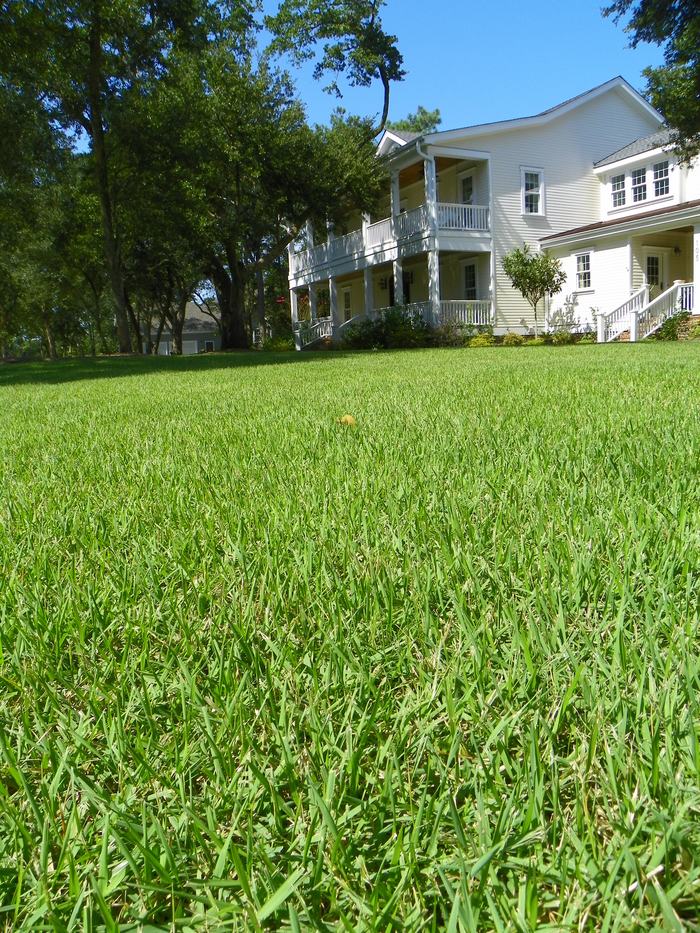
Lawns in southeastern North Carolina are suited to warm season turf grasses such as St. Augustine, zoysia, bermuda and centipede. Caring for warm season turf grasses is very different from caring for turf grasses grown in cooler climates. As warm season lawns get ready to transition into the dormant winter season, there are some important things that should be done, and others that should not be done, to keep lawns healthy.
Do NOT Fertilize!
Grasses should only be fertilized with nitrogen when they are actively growing. For warm season grasses this is during the spring and summer, not fall or winter. Fertilizing warm season lawns in fall or winter wastes fertilizer, encourages weed growth, and can intensify disease problems like large patch. In the cooler parts of NC and the United States, cool season grasses such as fescue and Kentucky bluegrass are grown. Cool season grasses do grow during the fall and early spring, and require fertilization at these times. Commercials and ads about fertilizing lawns in fall are referring to cool season grasses only.
Do NOT Water!
Warm season lawns should not be irrigated after early September. Fall is the time when warm season lawns are shutting down for winter. Continuing to irrigate lawns during fall can increase cold injury during winter and encourage disease problems. The only exception to this would be if we were experiencing a fall drought, which is not the case this year.
DO Control Weeds
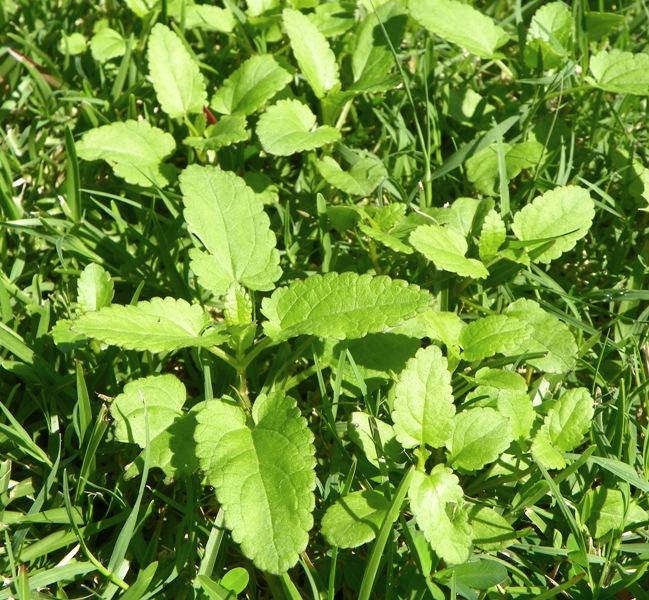
Just as there are warm and cool season grasses, there are also warm and cool season weeds. Cool season weeds come up in the fall, live through winter, then flower and die in the spring. Most cool season weeds are annuals, coming up each year from seed, but a few are perennials. Cool season perennial weeds come back from year to year from roots that persist in the soil. Two of the most troublesome, Florida betony and wild onion, have started sprouting in yards over the past few weeks.
Like most perennial weeds, it is very difficult to control Florida betony or wild onion by digging them up. Repeated mowing can weaken these weeds but will not kill them. The only way to really get rid of most perennial weeds is to spray them with herbicides, but one application will not do the job. Instead it takes repeated sprays over a couple of seasons. To begin controlling Florida betony or wild onion in your lawn, spray them now and again in February.