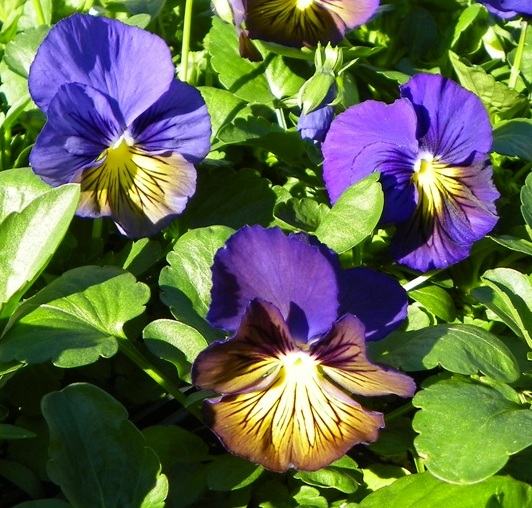
There are several important jobs to do in the landscape this time of the year. Tasks like cleaning up and mulching will help your landscape get off to a healthier start next season. Fall is also a wonderful time to plant trees, shrubs, and perennials, as well as spring blooming bulbs and hardy annuals like pansies. Enjoy the beautiful weather of the next several weeks by getting out in the yard and have some fun while caring for your landscape.
Clean Up!
Fall is the time to give your landscape a good clean up. In fact, cleaning up well at this time of the year will help prevent disease and insect problems next year since many pests spend the winter sheltering in old leaves and debris left from the previous season. Cleaning up will help remove pests from your landscape and prevent, or at least delay, their onset next season. If there are plants in your landscape that have had disease or insect problems this year, carefully clean up their fallen leaves and debris and remove it from your yard. Leaves that fall from healthy plants can be used as mulch or collected and composted.
As perennials go dormant, and leave behind only dry, dead stems, cut them back to ground level. You may want to leave some standing to provide a food source for birds, particularly perennials with lots of seeds like purple coneflowers and black eyed Susans. Most ornamental grasses stand up well through winter, adding texture and interest to the winter landscape. It is fine to cut back ornamental grasses whenever they start to look messy. Minimal pruning to remove only dead, broken or diseased limbs and twigs from trees and shrubs is okay to do now, but fall is not a good time for large scale pruning. Most trees and shrubs should not be pruned until late winter (Feb-March for our area), while spring blooming shrubs such as azaleas should not be pruned until after they flower.
Mulch!
After all the leaves have fallen, give your landscape plantings a finishing touch by spreading a layer of mulch over the top of beds and borders, but first check to see how deep your mulch already is. Three to four inches of mulch is perfecta round most plants but deeper levels can cause problems. If your mulch is already four inches deep but you want to give it a fresh look, try raking the mulch to turn over the brighter colored layer underneath the surface. Be careful to not pile mulch against the trunks of trees and shrubs since this can encourage diseases and insects. When mulching over dormant perennials, simply spread a two to three inch layer over the ground. A few perennials have evergreen leaves. Avoid covering the foliage of evergreen perennials with mulch whenever possible. Learn more about mulching: //pender.ces.ncsu.edu/
Plant!