Correct watering can make the difference between a bumper crop and complete failure. As we experienced earlier this summer and again this week, too much water can result in fruits and herbs having less flavor, increased disease problems, and plants drowning. On the other hand, if there is too little water, seedlings fail to come up, yields are reduced, and plants can die. Correct watering relies on many factors, including weather conditions, soil type, and what you are growing. As a result, how much and when to water is not a simple formula.
Understanding Water Needs
Fruits and vegetables are composed of up to ninety percent water that is absorbed from the soil by plant roots. If adequate water is not available from the soil while fruits and vegetables are growing, plants will be stunted and may drop flowers or fruits, reducing yields. When rainfall does not provide adequate water for developing crops, gardeners have to supplement with irrigation to protect yields and quality.
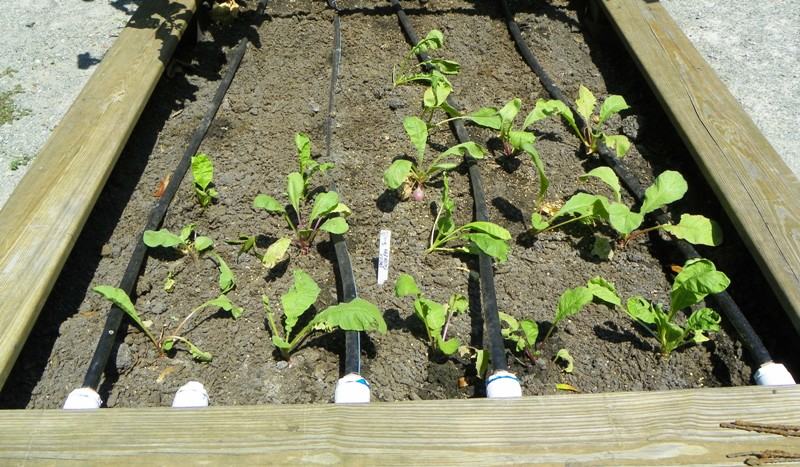
The most critical time to water vegetables, herbs, and fruits is the first few weeks after planting or seeding. August is the time to sow seeds of many fall vegetables in the garden, including carrots, turnips, beets, spinach, lettuce, cabbage, collards, broccoli, and kale, as well as cool season herbs such as parsley, cilantro, and dill. Once seeds are sown, it is critical to keep the top three to four inches of soil moist until seedlings reach four to five inches in height. This may require daily watering on hot, sunny days.
For fruits and summer vegetables, it is also critical to water from the time plants bloom until harvest is complete. Water shortages during this time will reduce yields and cause fruits to be smaller than normal. Because they grow in the cooler times of the year, cool season crops usually do not require additional water unless we have unusually dry weather. This is most likely to happen in fall.
Perennial herbs such as oregano, thyme, and rosemary need less water than vegetables and fruits. Once established, these plants often thrive with no additional watering, even in sandy soils. Overwatering these herbs reduces their flavor intensity and can kill plants.
If you garden in clay or heavy soils, or your garden is in a low lying area, too much water can be a serious threat to plant health. Plant roots need air as well as water to survive. When soils become waterlogged, all of the air space in the soil fills with water. As a result, roots drown, usually causing the whole plant to die. This can be a problem even in soils with good drainage during extended periods of wet weather like we have experienced this summer. Gardening in raised beds that are at least 6" to 8" above soil grade will help avoid issues with waterlogged soils.
Watering Systems