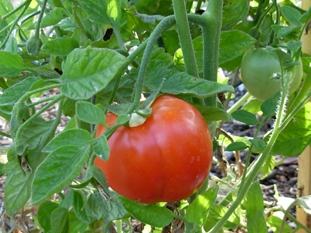
Soil temperatures have warmed to above 60 degrees in our region and a late frost is highly unlikely, which means it is time to plant tomatoes! Over the years, I have written more about tomatoes than any other single plant, which is a testament to the many challenges gardeners face when growing tomatoes in the coastal south. Following is a primer on tomato growing, pulled from the many articles I have written on the topic, with links to learn more.
Which are the best varieties?
There is no one best variety for our area. Cherry tomatoes are the easiest and most production, while beefsteak (very large fruited types) are the most challenging. Your best strategy is to plant several varieties, including at least one cherry tomato variety and at least one variety resistant to tomato spotted wilt virus. See these specific variety recommendations.
Preparing the soil
Like most vegetables, tomatoes grow best in a sunny area and in rich, well drained soil with a pH of 5.5-7.0. Add compost to your soil before planting by spreading a 2”-4” layer over the soil surface and tilling it in as deep as possible (ideally 8” deep or more). If your soil pH is below 5.5 (acidic) you should add lime. Soil pH levels in Southeastern North Carolina naturally range from 3.5 to 8.0, with soils closer to the coast often being on the high side. The only way to accurately measure your soil pH and determine if you need to apply lime is by submitting samples to the NC Department of Agriculture’s soil testing lab.
Detailed instructions on how to collect and submit soil samples are provided in a website from NCDA&CS and in this brochure. For a demonstration on collecting soil samples, see this video from NC State Extension.
Over-fertilizing can increase disease problems and result in huge tomato plants but no tomato fruits. Learn which fertilizers are best from this post.
Tomatoes are also easy to grow in containers. If your soil is infected with bacterial wilt or southern stem blight, growing tomatoes in containers may be your only option.
Plant deep!
Plant your tomatoes with the top of the root ball a few inches below soil level. Tomatoes are one of the few vegetables that will root along the stem. Planting deep allows tomato plants to form more extensive root systems. See more tomato planting tips.
Keeping tomato plants healthy
Many diseases attack tomato plants in the south. Some can be treated, others cannot. One of the most serious is Tomato Spotted Wilt Virus (TSWV). The only way to avoid this disease it to plant resistant varieties. Learn how this disease spreads, the symptoms of TSWV, and which varieties are resistant from this post.
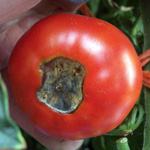
Rotten bottoms: Preventing blossom end rot
Blossom end rot