PEST ALERT UPDATE FROM NCSU TURFILES
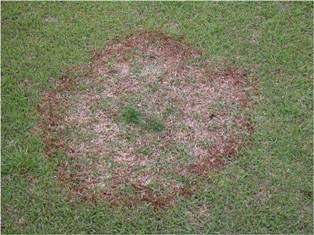
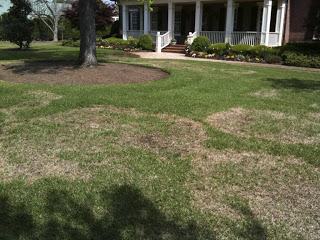
You know it's officially spring in North Carolina when there are giant patches of brown grass in bermudagrass, centipedegrass, St. Augustinegrass, and zoysiagrass. These giant patches of brown grass are better known as large patch, caused by the fungus Rhizoctonia solani, and if you've ever had an outbreak of this disease, you now know why the disease was coined large patch.
What you may not know however, is what your control options are this time of year. You shouldn't worry too much if you have this disease on bermudagrass. Bermudagrass tends to grow out of the damage once the temperatures are consistently warmer and the daylight longer.
As for our other warm-season friends, damage tends to be most severe on centipedegrass and recovery may take all summer in extreme cases. Unfortunately, there isn't much you can do to make for a magical recovery. We rarely recommend fungicides for large patch in the spring of the year, however in worst case scenarios, a fungicide application might help prevent the disease from spreading further. Fungicide applications are best when they are applied preventatively in the fall. If you choose to spray a fungicide this spring, don't expect a miracle to happen overnight. Also, remember that recovery will be even slower and tougher if you've applied a root pruning herbicide as your pre-emerge for summer weeds (these include many of the pre-emergent herbicides found in crab grass preventers and weed and feed products) .